Mostrando entradas con la etiqueta Patrick Ness. Mostrar todas las entradas

sábado, 25 de noviembre de 2017

Novedad: Libre, de Patrick Ness

Esta semana se ha puesto a la venta una nueva novela de Patrick Ness que lleva el título de Libre. Tiene 320 páginas y un precio de venta de 18,95€ en versión impresa y de 8,99€ en edición digital. 

Esta es su sinopsis:
La novela más personal y tierna de Patrick Ness, el aclamado autor de Un monstruo viene a verme. 
Este es el día más difícil en la vida de Adam Thorn. 
Su exnovio, al que todavía quiere, se va para no volver. La relación con su actual pareja, al que también quiere, peligra gravemente. Su hermano ha dejado a una chica embarazada, sus padres se niegan a aceptar su homosexualidad y, en el trabajo, sufre acoso laboral. 
Además, un fantasma ha despertado de las profundidades del lago y avanza hacia el pueblo...

jueves, 15 de diciembre de 2016

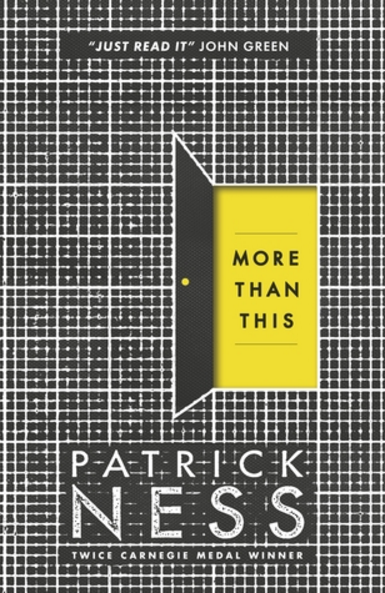
Ebook en oferta: More Than This, de Patrick Ness

En estos momentos, se puede adquirir en Amazon España el ebook More Than This, de Patrick Ness, al precio promocional de 2,99€. 

Ésta es su sinopsis:
A boy called Seth drowns, desperate and alone in his final moments, losing his life as the pounding sea claims him. But then he wakes. He is naked, thirsty, starving. But alive. How is that possible? He remembers dying, his bones breaking, his skull dashed upon the rocks. So how is he is here? And where is this place? It looks like the suburban English town where he lived as a child, before an unthinkable tragedy happened and his family moved to America. 
But the neighbourhood around his old house is overgrown, covered in dust and completely abandoned. What's going on? And why is it that whenever he closes his eyes, he falls prey to vivid, agonizing memories that seem more real than the world around him? 
Seth begins a search for answers, hoping that he might not be alone, that this might not be the hell he fears it to be, that there might be more than just this...

jueves, 13 de octubre de 2016

Novedad: Los demás seguimos aquí, de Patrick Ness

Hoy se pone a la venta Los demás seguimos aquí, de Patrick Ness, novela que reseñé (no muy positivamente, pero vuestra opinión bien podría ser diferente) cuando se editó en inglés. El libro tiene 240 páginas y un precio de 16,95€. 

Ésta es su sinopsis:
¿Qué pasaría si no fueras el Elegido? ¿El que se supone que tiene que luchar contra zombies o contra los fantasmas come-almas o con lo que quiera que sea esto, contra las luces azules y la muerte? ¿Qué pasaría si fueras como Mike? Él solo quiere graduarse e ir al baile de fin de curso, y quizás conseguir el valor suficiente para pedirle salir a Henna antes de que alguien haga saltar el instituto por los aires. Otra vez. 
¿Y qué pasaría si hubiera problemas más importantes para ti que el fin del mundo? ¿Y si solo tuvieras que encontrar lo extraordinario en tu vida normal? Incluso aunque tu mejor amigo sea el Dios de los Pumas... 
Esta nueva novela de Patrick Ness es descarada, irreverente y desternillante, y nos recuerda que todos tenemos algo extraordinario en nuestras vidas.

jueves, 8 de octubre de 2015

The Rest of Us Just Live Here, de Patrick Ness

Banda sonora de la reseña: Sugiero leer esta reseña escuchando Great Balls of Fire, de Jerry Lee Lewis (Spotify, YouTube). 

La idea del "Elegido" es tan central en la mayor parte de las novelas de fantasía que, a veces, parece hasta inevitable. Mi impresión es que se trata de un tropo claramente reaccionario: si no eres alguien especial, no podrás derrotar al Mal. No importa lo mucho que lo intentes, si no tienes el don tus acciones nunca supondrán una diferencia. Y, por supuesto, tener el don no depende de algo que puedas hacer, sino de quiénes son tus padres o algún otro suceso fortuito que se decide, casi siempre, incluso antes de que nazcas.

Por ello, me interesan aquellas obras que tratan de socavar la idea del Elegido (por ejemplo, Adam-Troy Castro ha escrito en contra de este tropo en multiples ocasiones) y tenía grandes esperanzas con All The Rest of Us Just Live Here, la nueva novela de Patrick Ness. ¿Qué pasaría si, por una vez, los chicos importantes (indie kids, como se les llama en el libro) que están destinados a grandes hazañas y luchan, día sí día también, para salvar al mundo de la destrucción total no fueran tan importantes? ¿Y si, por una vez, los chicos normales, los personajes secundarios que sólo aparecen cuando son víctimas del daño colateral fueran los protagonistas principales?

Esto es lo que intentar lograr The Rest of Us Just Live Here y es algo que Ness, formalmente, solventa de forma absolutamente brillante. El comienzo de cada capítulo resume brevemente lo que supone que vamos a encontrar a continuación, con párrafos como éste:
CHAPTER THE FIFTH, in which indie kid Kerouac opens the Gate of the Immortals, allowing the Royal Family and its Court a fissure through which to temporarily enter this world; then Kerouac discovers that the Messenger lied to him; he dies, alone.
Pero entonces, al pasar la página, no encontramos ni rastro de esa historia. Ni Kerouac, ni Immortals, ni Royal Family, y sólo llegamos a saber que algo extraño está sucediendo de fondo a través de reflejos, cuando los indie kids se cruzan en el camino de Mike, Mel, Jared u otro de los protagonistas reales de la novela. Le reconozco al autor que este proceso de desconstrucción de la típica trama de la novela de fantasía juvenil está perfectamente logrado y que, con sólo unas páginas, consigue desmontar todas nuestras preconcepciones como lectores.

Sin embargo, en mi opinión, The Rest of Us Just Live Here falla estrepitosamente como novela. Solamente eliminar algo no es suficiente; hay que sustituirlo por otra cosa, y esa otra cosa debería ser más interesante, más relevante que lo que se ha quitado. Por desgracia, Ness renuncia a un gran cliché para reemplazarlo con... un montón enorme de clichés aún mayores.

En The Rest of Us Just Live Here no vais a encontrar a la pequeña niña con poderes mágicos que está destinada a salvar al mundo luchando contra el viejo y feo señor de todas las cosas malas. Pero a cambio vais a encontrar a un grupo de adolescentes a pocas semanas de la fiesta de graduación del instituto con todos los típicos problemas de un grupo de adolescentes a unas pocas semanas de la fiesta de graduación del instituto. Y poco más.

La novela es, por tanto, otro ejemplo más de una historia que hemos leído (y visto) un trillón de veces. El triángulo amoroso, la chica anoréxica, la madre obsesionada con el trabajo, el amigo gay, el padre alcohólico... No falta ni uno. Ness acierta al pensar que la mayor parte de los lectores no queremos leer otra vez sobre el Elegido, pero no sé por qué imaginó que querríamos leer, una vez más, sobre adolescentes con problemas de ansiedad que empiezan a descubrir el amor mientras buscan su sitio en la vida. Yo, al menos, he tenido más que suficiente de este tipo de historias.

Así que, sí, entiendo la moraleja de la novela: lo normal es bueno y no existe el destino ni la predestinación a grandes hazañas. Pero, ¿sabéis qué? Ya era consciente de ello y no necesito leer una manida historia de paso a la edad adulta para darme cuenta de ello. Y, por otro lado, es posible que lo normal sea bueno, pero también es, en muchas ocasiones, muy aburrido. Ya tengo suficiente normalidad en mi, ehhhh, normal vida cotidiana, gracias. 

The Rest of Us Just Live Here, by Patrick Ness


(Disclaimer: English is my second language, so I want to apologize in advance for there may be mistakes in the text below. If you find any, please let me know so that I can correct it. I'd really appreciate it. Thanks.)

Review Soundtrack: I suggest reading this review while listening to Great Balls of Fire, by Jerry Lee Lewis (Spotify, YouTube). 

The idea of the "Chosen One" is so central to most fantasy novels that sometimes it seems almost unavoidable. My impression is that, as a trope, it is clearly reactionary: if you are not somehow special, then you won't be able to defeat The Evil. It doesn't matter how hard you try, if you don't have the gift you won't ever make a difference. And, of course, having the gift does not depend on something you can do, but on who your parents are or on other fortuitous events that almost always set even before you are born. 

Thus, I am always interested in works that try to subvert the idea of the Chosen One (for instance, Adam-Troy Castro has written against this trope many times) and that's why I had high hopes in All The Rest of Us Just Live Here, Patrick Ness's newest novel. What if, for once, the important kids (indie kids, as they are called in the book) that are destined for great deeds and fight, on a daily basis, to save the world from utter destruction were not that important? What if, for once, the normal kids, the secondary characters that you only get to see when they suffer collateral damage were the main protagonists?

That is what The Rest of Us Just Live Here tries to accomplish and something that Ness, formally, achieves in a completely brilliant way. The beginning of each chapter quickly outlines what you are supposed to find next, with paragraphs like this one:
CHAPTER THE FIFTH, in which indie kid Kerouac opens the Gate of the Immortals, allowing the Royal Family and its Court a fissure through which to temporarily enter this world; then Kerouac discovers that the Messenger lied to him; he dies, alone.
But then, when you turn the page, you find nothing of that story. No Kerouac, no Immortals, no Royal Family, and you only get to know that something strange is happening in the background through glimpses, when the indie kids cross paths with Mike, Mel, Jared or any of the actual protagonists of the novel. I give it to the author that this process of deconstructing the typical YA fantasy plot is right on spot and, with just a few pages, he gets to defeat all our expectations as readers.  

However, in my opinion, The Rest of Us Just Live Here utterly fails as a novel. Just subtracting something is not enough; you need to replace it with something else, and that something else must be more interesting, more relevant than what you took away. Sadly, Ness removes one big cliché only to replace it with... a lot of other, even bigger clichés.       

In The Rest of Us Just Live Here you won't find a magical little girl destined to save the world fighting again the old, ugly lord of all evil things. But instead you will find a group of teenagers a few weeks before High School prom and all the typical problems of teenagers a few weeks before High School prom. And little else. 

The novel is, then, just another instance of a story that we've read (and watched) a zillion times. The love triangle, the anorexic girl, the absent mother, the gay friend, the alcoholic father... You name it, you have it. Ness correctly guessed that most of us don't want to read again about the Chosen One, but I don't know why he thought that we would be interested in reading, once again, about anxious teenagers discovering love and trying to find their place in life. I, for one, have had more than my fair share of it. 

So, yes, I get the point: normal is good and there is not such a thing as fate and predestination to great deeds. But, you know what? I already knew that and don't need to read another trite coming of age novel to realize. And, on the other hand, normal might very well be good but it also is, in many occasions, very boring. I have enough normal in my daily and, ehhhh, normal life, thank you very much.