Mostrando entradas con la etiqueta Ramez Naam. Mostrar todas las entradas

martes, 16 de febrero de 2016

Novedad: Nexus, de Ramez Naam

Minotauro pone hoy a la venta Nexus, una muy recomendable mezcla de ciencia ficción y techno-thriller obra de Ramez Naam (a quien tuve el placer de entrevistar junto con Leticia Lara hace unos meses). El libro tiene 448 páginas y cuesta 21,95€ en su edición impresa y 11,99€ en formato digital. 

Ésta es la sinopsis de la novela:
Año 2040. Gracias a Nexus, una nanodroga experimental, los humanos pueden unir sus mentes. 
Cuando Kade, un joven estudiante de biología, es descubierto mejorando Nexus, se verá obligado a infiltrarse en el peligroso mundo del espionaje internacional. 
De los círculos académicos, a los círculos de poder; de las fi estas underground de San Francisco, a los ilegales mercados de tecnología de Bangkok; de la sede de una nueva agencia del gobierno estadounidense en Washington DC, a un clandestino laboratorio de Shanghai. 
Nexus es una visión de un futuro a punto de estallar.

lunes, 25 de mayo de 2015

Interview with Ramez Naam

Today I have the distinct pleasure of joining Leticia Lara, from the wonderful blog Fantástica Ficción, to interview Ramez Naam, author of Nexus, one of the novels that I enjoyed the most last year. Hope you like the interview (you can read a translation into Spanish at Fantástica Ficción).

Leticia Lara & Odo: When did you know you wanted to become a writer? Which other authors have influenced you the most? Is there any current writer that you admire?

Ramez Naam: I’ve been a reader of science fiction my whole life, but I didn’t ever seriously intend to write a novel! Nexus arrived almost by accident. I wrote a few chapters for fun, thinking the whole time I was writing a short story. Friends liked it and encouraged me to improve it and to keep it going. At some point I realized I had a novel growing.

There are so many great authors. John Barnes is amazingly versatile and has influenced me quite a bit. Cory Doctorow I admire for both his books and for his continual fight for social justice. Recently I’m a huge fan of Hannu Rajaniemi, who’s become a friend. His Quantum Thief trilogy is one of my favorite pieces of science fiction of the last few years.

LL&O: Although you grew up and currently live in America, you were born in Egypt. Do you think that has had an impact in your writing? What do you think about the diversity of SF literature nowadays?

RN: I grew up aware that there was a wider world. Many Americans don’t. The US is such a large nation, most of a continent really, that Americans can often ignore the world outside their borders.

There’s so much science fiction being written now. But it’s rare for non-American authors to get into the American market. So I’m thrilled to see Liu Cixin get a Hugo nomination for Three Body Problem. Inside the English language, Ian McDonald has been a big influence on me in his setting of his novels outside the US – in India, Turkey, Brazil.

LL&OHas you work on Microsoft influenced your way of writing? What can you explain us about Apex NanoTechnologies? What is similar and what is different between writing code and writing fiction?

RN: Working at Microsoft and in a startup taught me a lot about how technology actually works, and how it gets built.

Code and fiction are quite different, but I manage my writing of fiction as if I was writing code. I build a plan for the book – a detailed outline. And then I turn that into a schedule for myself, with assignments of certain scenes or chapters on certain days. Different writers keep themselves on track with different tools. That one works for me.

LL&OYour books are set in a very near future. Do you fear they become obsolete soon?

RN: Oh, I’m sure my books will get obsolete! It’s not even because they’re set soon, it’s because the world changes so fast. I had people actually driving cars in the future. I had far too few drones. Most books set in space still have human pilots for space ships. We’re going to look back at that and laugh.

LL&OWe really love your story “Water”, but we also find it a bit terrifying. Do you think we are ready for that kind of technology? Do you think that scientific research should be mainly funded by private companies or by governments?

RN: It was meant to frighten. J I think the research can be funded by private companies, but we need consumer protections. We aren’t really close to brain computer interfaces being mainstream yet – I think – but they have both huge promise and some real challenges when they’re ready.

LL&OAlso talking about “Water”. How do you feel about being nominated for the Seiun award?

RN: It’s a huge honor! And Nexus has not yet been translated to Japanese, so I’m hoping that this exposes Japanese readers to my work…and maybe leads to Nexus coming to Japan.

LL&OWhat are the main differences between writing fiction and non-fiction? Do you hope to reach the same audience with both?

RN: Some people read only one or the other. With non-fiction you can be more clear and more direct on your point. With fiction, your point or message has to be secondary to telling a good story. At the same time, people come up to me and say that my novels kept them up reading until 3 in the morning. No one has ever said that about my non-fiction.

LL&OIn both your fiction and non-fiction books you have a clear (and quite optimistic) position in favor of scientific research and technological progress. Do you think that all research is legit? Is there such a thing as “dangerous knowledge”?

RN: Some knowledge is more dangerous than others. The knowledge of how to make a nuclear bomb or a bioweapon is dangerous. But people apply the idea of ‘dangerous knowledge’ far too broadly. When you see someone saying that, usually they’re trying to stop an idea. And usually that’s not because the idea is dangerous to society – but because it’s dangerous to the powerful.

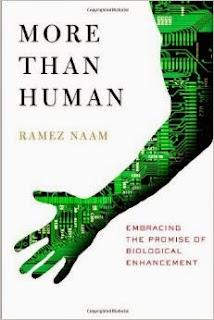
LL&OYour book More Than Human was published almost 10 years ago. What has changed since then? Which is the recent advance in brain implant and body augmentation technologies that you are more excited about? Are transhumans and posthumans closer or further far away than what you expected when you wrote the book?

RN:Things have moved more slowly than I expected them to in More Than Human. I thought, by now, we’d have more progress in gene therapy, in aging, and so on. It’s given me more appreciation for how slowly science moves, and how many exciting discoveries don’t work out.  That said, I’m still very excited about brain-computer interfaces, and I see a new wave of innovation happening there.

LL&OWhat do you think about the idea of the so-called Vingean Singularity? Is it unavoidable, as Ray Kurzweil and others claim, or is it just fantasy?

RN: I don’t see a ‘singularity’ any time soon. It’s very hard to have runaway self-improvement. Making something twice as smart probably isn’t twice as much work. It’s probably four times or ten times or a hundred times as much work. I wrote a blog post about that here: The Singularity is Further Than it Appears.

LL&OWhat can you tell us about your future projects? Apex, the third book in the Nexus series, has just been published. Will it be the last book in that universe or are you planning to visit it again?

RN: I love the Nexus world, but Apex is the last book set there – at least for a while. It’s time for me to try something new. The next book will be another science fiction novel. And that’s all I can say about it right now!
LL&OAre social networks important for you relationships with other authors and with your readers?

RN: Absolutely. I have friends I’ve made online – particularly on twitter – that I’ve never met in person. Authors share ideas, and support and cheer each other on. Fans send compliments and questions and interesting links they think you should see. It’s great.

LL&OWhat can you tell us about the possibility of publishing your books in Spanish? What do you think about reading translations? Do you think the translator needs to be guided by the author?

RN: Nexus is being translated into Spanish right now! It’ll be released by Editorial Planeta. I don’t yet have a date for it. I trust my translators. They have a very hard job to do, but so far the feedback from readers around the world is that they’ve done an excellent job.

LL&OIn addition to your writing, you are a frequent speaker in all kinds of conferences and symposia. What is the strangest talk you’ve been invited to?

RN: The most intimidating talk I ever gave was to a group of neuroscientists. The head of an institute asked me to come speak to his staff about the future of brain science. You can bet I was nervous! But it went extremely well.

LL&OWhere can our readers learn more about you and your work? 

RN: At rameznaam.com or on twitter: @ramez 

lunes, 29 de septiembre de 2014

Nexus, de Ramez Naam

Banda sonora de la reseña: Sugiero leer esta reseña escuchando The Nexus, de Amaranthe (Spotify, YouTube).

He tenido Nexus, la excelente novela de debut de Ramez Naam, demasiado tiempo esperando en mi estantería, principalmente a causa de la etiqueta de techno-thriller con la que muchas veces he visto calificarla. En mi reducida experiencia, los techno-thrillers suelen tener poco de techno (y, lo que es peor, ese poco es inverosímil y está desencaminado) y mucho de thriller (convencional), una combinación que no podría interesarme menos. Pero Nexus es algo completamente distinto.

Si tuviera que usar únicamente dos palabras para describir mis impresiones después de leer Nexus, esas serían "perfecto equilibrio". Perfecto equilibrio entre la especulación científica y las escenas de acción; perfecto equilibrio entre el desarrollo de los personajes y el avance de la trama; perfecto equilibrio entre entretener a los lectores y hacerlos pensar.

Una de las sorpresas más agradables de Nexus es el modo en que Naam consigue hacer que ideas que no son especialmente nuevas u originales (los implantes cerebrales o las modificaciones corporales, por ejemplo) se conviertan en fuente de reflexión y especulación. Y lo consigue centrándose no sólo en los cambios que experimentarían aquellos individuos que adoptaran estas tecnologías, sino en el impacto en la sociedad como un ente global. Es evidente que Naam ha dedicado mucho tiempo a pensar en estos asuntos y ha sido capaz de reflejar tanto las oportunidades que esta revolución traería como los riesgos que, como especie, tendríamos que afrontar.

Los personajes tienden un tanto hacia el cliché pero, a pesar de ello, son verdaderamente interesantes, principalmente porque tienen que tomar decisiones éticamente muy complejas. Hay una clara evolución en sus personalidades, destacando especialmente el caso de Samantha Cataranes, cuyo arco hace un muy buen uso de los flashbacks y de la dosificación de información. Los personajes secundarios so también muy interesantes, especialmente Feng, que parece sacado de una película (buena) de James Bond, y Main, que no sólo tiene un gran impacto emocional sino que apunta las direcciones en las que Crux, la secuela de Nexus, puede desarrollarse.

El ritmo es prácticamente perfecto. Supongo que casi todo el mundo estará de acuerdo en que "pasapáginas" es una palabra de la que se ha abusado a la hora de describir un libro, pero en este caso encaja exactamente con lo que uno se encuentra en Nexus. Los capítulos son cortos, con muchos cambios de punto de vista, y siempre está pasando algo interesante, bien sea una escena de acción o una discusión sobre las implicaciones morales de una cierta tecnología. Algunas partes están repletas de humor (las pruebas del programa Don Juan, por ejemplo), otras llenas de sentido de la maravilla (la visita al mercado de Sukchai) o son, simplemente, emocionantes (como algunas de las revelaciones sobre el pasado de Cataranes). De nuevo, una excelente mezcla de diferentes elementos con un equilibrio perfecto.

También disfruté mucho con un capítulo extra, que se encuentra después del final de la historia, en el que el autor explica algunas cosas acerca de las investigaciones científicas reales que le inspiraron para crear el trasfondo tecnológico de la novela. Es corto, pero completamente asombroso. Tanto que, después de terminar Nexus, comencé inmediatamente a leer More Than Human, un libro de ensayo que Naam escribió algunos años antes que su novela y en el que explora diferentes formas en las que la ciencia puede ayudar a mejorar nuestros cerebros y nuestros cuerpos.

A pesar de todo esto, Nexus también tiene algunos problemas menores. Como mencionaba más arriba, algunos de los personajes son un tanto unidimensionales y caen en el cliché, especialmente los que trabajan para el gobierno estadounidense. La prosa es funcional y resulta complicado encontrar alguna metáfora. Pero el mayor problema, en mi opinión, es que el libro no es demasiado sutil y, en ocasiones, se acerca a un panfleto de propaganda. Creo que Naam apunta varios argumentos muy sólidos a favor del progreso científico y tecnológico, pero aunque tiendo a estar de acuerdo con esa opinión, tengo la sensación de que es demasiado optimista sobre la naturaleza humana.

En cualquier caso, recomiendo muy especialmente la lectura de Nexus. Es muy entretenido y, además, hace reflexionar; una excelente combinación de especulación interesante con una trama que engancha. Sólo lamento no haberlo leído antes y estoy ansioso por ponerme con Crux, que ya me está esperando en mi Kindle.

Nota: Quiero agradecerme a mi buena amiga Leticia Lara, de Fantástica-Ficción, el haberme empujado a leer esta maravillosa novela. ¡Gracias, Leti!

(You can also read this review in English/También puedes leer esta reseña en inglés)    

Nexus, by Ramez Naam

(Disclaimer: English is my second language, so I want to apologize in advance for there may be mistakes in the text below. If you find any, please let me know so that I can correct it. I'd really appreciate itThanks.)

Review Soundtrack: I suggest reading this review while listening to the The Nexus, by Amaranthe (Spotify, YouTube).

I have had Nexus, Ramez Naam's excellent debut novel, for too long sitting on my shelf, mainly because of the techno-thriller that has been many times attached to it. In my reduced experienced, techno-thrillers usually have little of techno (and, even worse, that little is often implausible and misguided) and much of (conventional) thriller, a combination that I couldn't care less for. But Nexus is a completely different beast.

If I had to use just two words to summarize my impressions after reading Nexus, they would "perfect balance". Perfect balance between the scientific speculation and the action scenes; perfect balance between developing the characters and advancing the plot; perfect balance between entertaining the readers and making them think.

One of the most pleasant surprises of Nexus was the way Naam manages to make ideas that are not specially new or original (brain implants or body augmentations, for instance) really thought provoking. And that is because he focuses not only on the changes that these technologies will bring for the individuals adopting them, but for the society as a whole. It is evident that Naam has devoted a lot of time to think about these issues and has been able to convey both the chances and possibilities that this revolution would bring and the risks that we, as a species, would likely be facing when it comes.

The characters are a bit cliched but, nonetheless, really interesting, mainly because they have to make really difficult ethical choices. There is also a clear evolution of their personalities, most notably in the case of Samantha Cataranes, whose arc makes a perfect use of hints and flashbacks. The secondary characters are also very interesting, especially Feng, who seems to be taken from a (good) James Bond movie, and Mai, who is not only used to great emotional impact but also gives some clues about the paths that Crux, the sequel to Nexus, can follow.  

The pace is almost perfect. I think most of you will agree that "page-turner" is a word that has been overused to describe books, but in this case it aptly describes what you will find in Nexus. Despite the book having more than 450 pages, I read it in just a few days. The chapters are short, with many changes of point of view, and there is always something interesting happening, whether you are reading an action scene or a discussion about the moral implications of a certain technology. Some parts are hilarious (the test of the Don Juan program, for instance), others are full of sense of wonder (the visit to the ... market) or emotionally moving (some of the revelations about the past life of Cataranes). Again, an excellent mix of different elements with a perfect balance.

I also enjoyed very much an extra chapter, after the story ends, in which the author explains some actual scientific research that inspired him to create the technological background of the novel. It is brief, but completely awe-inspiring. So much, that, after finishing Nexus, I immediately started reading More Than Human, a non-fiction book that Naam wrote several years before his novel and in which focuses on the different ways science can help enhancing both the body and the brain.

Despite all this, Nexus also has some minor problems. As I mentioned above, some of the characters are a bit one-dimensional and cliched, especially the ones working for the American government. The prose is serviceable at best, and you will struggle to find a metaphor. But the main problem, in my opinion, is that the book is not very subtle and even a bit preachy sometimes. I really think that Naam makes some very good points in favor of scientific and technological progress, but though I tend to agree with that vision, I have a feeling that he is too optimistic about human nature.

Anyway, I can highly recommend reading Nexus. It is a fun, thought-provoking read, an excellent combination of interesting speculation with a gripping plot. I only regret not having read it before and I am really looking forward to reading Crux,  which is already waiting for me on my Kindle.

Note: I want to thank my good friend Leticia Lara, from Fantástica-Ficción, for pushing me to read this wonderful novel. Thanks, Leti!

(You can also read this review in Spanish/También puedes leer esta reseña en español)    

jueves, 6 de febrero de 2014

An Aura of Familiarity, una antología del Institute for the Future


Banda sonora de la reseña: Sugiero leer esta reseña escuchando Take Me To The Water de Rage (Spotify, Youtube). 

An Aura of Familiarity: Visions from the Coming Age of Networked Matter, antología editada por el Institute for the Future, es una iniciativa curiosa y más que interesante. Recopila seis relatos originales escritos por reconocidos autores de ciencia ficción y unidos por un tema común: un futuro en el que los objetos cotidianos poseen cierto nivel de "inteligencia" y están conectados entre sí en red. Además, todos los relatos están disponibles de forma gratuita online y están acompañados de ilustraciones de Daniel Martin Diaz y de breves vídeos explicativos de los propios autores.

Como digo, el proyecto es francamente interesante y la idea totalmente encomiable. Sin embargo, la puesta en práctica de la misma, al menos en cuanto al resultado final conseguido por los autores, deja bastante que desear. 

De entre todas las historias, destaca claramente "Water" de Ramez Naam, un cuento escrito con mucha inteligencia y una considerable dosis de mala leche y dotado de un ritmo casi perfecto y de un desenlace totalmente redondo. Sin duda la mejor historia de esta antología y una de las mejores del año. Muy recomendada.

Los demás cuentos, por desgracia, no están a la altura. En segundo lugar, pero a considerable distancia de "Water", situaría "Social Services" de Madeline Ashby. No es un mal relato, pero se ve excesivamente lastrado por un comienzo dubitativo y una personaje protagonista anodina. Es, también, una de las historias que menos aprovecha las posibilidades del tema de la antología. El cuento de Rudy Rucker ("Apricot Lane"), por su parte, comienza con brío y planteando posibilidades más que interesantes, pero se pierde pronto en esa curiosa mezcla de sinsentidos e infidelidades matrimoniales tan característica del autor.

Muy en su línea está también Cory Doctorow, que en "By His Things Will You Know Him" se entretiene con una premisa tan insulsa como irrelevante. Bruce Sterling, por el contrario, se esfuerza tanto en abrumar al lector con referencias "modernillas" (Tumblr, Stephen Wolfram, iPhones, Netflix, phablets...) en "From Beyond the Coming Age of Networked Matter" que se podría pensar que es una historia paródica... si no fuera porque tampoco funciona como parodia de nada.

Mención aparte merece "Lich House", la historia de Warren Ellis, que es la peor del libro hasta el punto de resultar casi ilegible. Se trata de un prolongado infodump, carente por completo de ritmo narrativo y de tensión alguna, que consigue aburrir soberanamente pese a su escasa longitud.

En definitiva, una antología de la que recomiendo leer el fantástico relato de Naam y olvidar completamente el resto. Eso sí, repito que me parece un proyecto tremendamente prometedor y espero que el Institute for the Future siga publicando libros de esto tipo... sólo que con una mejor selección de historias.