Mostrando entradas con la etiqueta Benjanun Sriduangkaew. Mostrar todas las entradas

jueves, 11 de enero de 2018

Antonio Díaz reseña Winterglass, de Benjanun Sriduangkaew

Antonio Díaz nos trae, una vez más, una interesantísima reseña. Se trata de Winterglass, una novela corta de Benjanun Sriduangkaew. ¡Espero que os guste!

Banda sonora de la reseña: Antonio sugiere leer esta reseña escuchando Journey of the Angels, de Enya (Spotify, YouTube)

Winterglass es el segundo trabajo de Benjanun Sriduangkaew que leo, tras “Puente Silencioso, Cascada Pálida” en la web de Cuentos para Algernon, traducido por la siempre sorprendente Marcheto. Os podéis hacer un favor ahora mismo e ir allí para echarle un vistazo. Winterglass cuenta la historia de Nuawa, una mujer que se gana la vida como luchadora (a veces, gladiadora, a veces cazarrecompensas) en la capital de Sirapirat. Nuawa es hija de unas insurgentes anti-imperialistas, y en su corazón arde el deseo de acabar con la Winter Queen, que conquistó Sirapirat y la ha sumido inexorablemente en un invierno eterno.

Ambas obras de Sriduangkaew tienen en común la intrincada prosa, repleta de poesía y figuras retóricas del pensamiento. En esta novela corta, la autora de ascendencia tailandesa nos sumerge en un mundo al que apenas dedica espacio pero del que cuenta muchas cosas. Claramente Sriduangkaew tomó buena nota de la lección aquella del ‘show, don’t tell’ y la lleva hasta la máxima expresión en Winterglass. Aunque la propia autora lo define como ciencia ficción, personalmente pienso que un mundo en el que los avances tecnológicos no están basados en ninguna de las categorías listadas en el punkpunk (ni siquiera en las más locas), sino nada más y nada menos que en fantasmas, suena más a magia que otra cosa. Soy consciente de la famosa Tercera Ley de Clarke pero, seamos serios, ¡calientan el agua para bañarse con puñeteros fantasmas! Aunque pueda resultar un tanto ridículo, si uno parte de la premisa de que se puede utilizar la energía espiritual para generar energía real (comparable a quemar carbón o calentar agua, aunque con sus propias particularidades, como cabe de esperar), Sriduangkaew hace una gran labor creando una sociedad que produce, recauda y transforma almas de seres vivos para convertirlas en combustible. Sólo esta idea ya da para una novela entera ella sola.

Winterglass también introduce otro concepto fuertemente fantástico que da nombre a la novela corta: los fragmentos de cristal. Según cuenta la leyenda, hay gente que posee en su interior ‘fragmentos de cristal’ que les hacen ser codiciados por la propia Winter Queen y, quizás, tener capacidades especiales. La otra protagonista de la novela, la general Lussadh, mano derecha de la Winter Queen y traidora a su patria, tiene uno de esos fragmentos en su corazón.

La novela corta alterna el punto de vista de Nuawa, en el que se nos cuenta cómo se prepara para competir en un torneo mortal para acercarse a la Winter Queen; y el de Lussadh, enviada por la reina a Sirapirat para traerle al ganador de dicho torneo. Por supuesto, los caminos de ambas se cruzan y dan lugar a las mejores escenas del libro. Los sentimientos de ambas y las cosas que llegan a hacer como resultado de sus encuentros me mantuvieron pegado a la página. Sriduangkaew dice mucho con muy poco: miradas, gestos mínimos o simplemente suposiciones sobre las acciones de la otra dan lugar a interesantes interpretaciones por los personajes.

Winterglass tiene varias escenas de acción narradas muy correctamente, pero las partes más interesantes son aquellas en las que el lector trata de adivinar qué camino escogerá cada una de las protagonistas.

Sin embargo, el final me dejó absolutamente insatisfecho. Me da la impresión de que Sriduangkaew termina la obra sin concluir la historia, dejándonos en un final congelado (pun intended). Estuve investigando si era la primera parte de una saga, pero parece que no es así y que la historia está completa. La verdad es que ya ha pasado algo de tiempo desde que la leí y estoy un poco más en paz con ese final. Si alguien se anima a leerla que me deje su opinión en los comentarios (o que no dude en contactar conmigo por Twitter). Ahora bien, Sriguangkaew entra en la lista de autores a los que seguir la pista. Posiblemente debería hacerle caso a Odo y leerme alguno más de sus relatos cortos. Después de todo no hay tanta gente que pueda entrar en su lista autores de relatos ni que haya tenido el placer de ser entrevistada por él, ¡y por Leticia Lara también!

miércoles, 6 de diciembre de 2017

Novedad: Winterglass, de Benjanun Sriduangkaew

Ya se encuentra a la venta Winterglass, la nueva novela corta de Benjanun Sriduangkaew. Esta es su sinopsis:
Winterglass is a sci-fantasy about one woman’s love for her homeland (Sirapirat) and her determination to defeat the Winter Queen who has overtaken the land. 
The city-state Sirapirat once knew only warmth and monsoon. When the Winter Queen conquered it, she remade the land in her image, turning Sirapirat into a country of snow and unending frost. But an empire is not her only goal. In secret, she seeks the fragments of a mirror whose power will grant her deepest desire. 
At her right hand is General Lussadh, who bears a mirror shard in her heart, as loyal to winter as she is plagued by her past as a traitor to her country. Tasked with locating other glass-bearers, she finds one in Nuawa, an insurgent who’s forged herself into a weapon that will strike down the queen. 
To earn her place in the queen’s army, Nuawa must enter a deadly tournament where the losers’ souls are given in service to winter. To free Sirapirat, she is prepared to make sacrifices: those she loves, herself, and the complicated bond slowly forming between her and Lussadh. 
If the splinter of glass in Nuawa's heart doesn't destroy her first.

martes, 9 de diciembre de 2014

Dos novelas cortas: Delirios de grandeza y Scale Bright

Cada vez me gusta más el formato de novela corta para la ciencia ficción y, en general, para toda la literatura fantástica. No sólo se agradece el poder leer una historia en una sola tarde, sino que el hecho de tener que centrarse en unos pocos elementos hace que los autores prescindan del relleno que tan de moda está últimamente. Lo poco agrada y lo mucho enfada, que se suele decir.

Por desgracia, en comparación con las novelas o, incluso, con los relatos, son pocos los sitios donde se pueden encontrar novelas cortas interesantes y de calidad. Las facilidades que ofrece la publicación digital han mejorado un poco la situación, pero aún son relativamente pocas las editoriales y revistas que apuestan por el formato. Por ello, he decidido intentar reseñar más novelas cortas, empezando con dos de las más interesantes que he encontrado este año.

Empezaré con Delirios de grandeza, de Santiago García Albás, cuyo El rey Lansquenete no me cansaré de repetir que me pareció excelente. Esta nueva entrega (en cuanto a orden de publicación en Sportula, que no en cuanto a momento en que fue escrita) de la serie Cybersiones comparte algunos temas e inquietudes con la anterior, aunque es de lectura completamente independiente. De nuevo nos encontramos con una sociedad distópica posibilitada por una tecnología que filtra lo percibido por nuestros sentidos. Y de nuevo nos encontramos con una trama detectivesca, de crimen y de venganza.

La narración es quizá algo menos afilada que en El rey Lansquenete y no llega al nivel de calculada perfección del anterior relato, pero vuelve a tener momentos verdaderamente impactantes. La trama es quizá un poco más predecible, aunque igual de interesante y el final está más que a la altura. Una historia de lo más recomendable, que sólo palidece un poco porque Albás había puesto el listón muy alto con la primera entrega de Cybersiones

Por otro lado, quiero también hablar brevemente de Scale Bright, de Benjanun Sriduangkaew. Y quisiera hablar sólo de la obra, sin entrar a valorar las últimas revelaciones sobre el increíble comportamiento de la autora, que aún me tienen en estado de shock. Es difícil, por lo grave de estas actuaciones y porque el trato por email y a través de redes sociales de Sriduangkaew, una de mis escritoras de relatos favoritas, para conmigo siempre ha sido exquisito. Pero me esforzaré en centrarme exclusivamente en los méritos literarios de esta novela corta. 

Scale Bright es una aproximación moderna a una historia clásica de la mitología china. Confieso que no he leído la versión tradicional, pero conocía mínimamente el trasfondo porque aparece colateralmente en otras obras de Sriduangkaew. En cualquier caso, estar familiarizado con ella no es, ni mucho menos, indispensable para disfrutar de esta versión, que adopta la forma de una fantasía urbana con tintes mitológicos y con una clara preocupación por problemas de identidad sexual y de género.

La prosa es algo más comedida que en otras obras de la autora, las imágenes menos impactantes y el worldbuilding menos espectacular. Pero aún así, esta novela corta es muy recomendable. La narración es ágil y, aunque se centra en las relaciones entre los personajes (todos ellos fantásticamente desarrollados), tiene también algunos momentos de acción muy interesantes. La narración, tras un comienzo brillante, tiene algún problema de ritmo en su parte central, pero se recupera en la parte final, que es excelente. No me avergüenza reconocer que prefiero la vertiente de ciencia ficción de la obra de Sriduangkaew, pero aún así he disfrutado con Scale Bright y aconsejo su lectura.

Dos novelas cortas, pues, muy diferentes en casi todos los aspectos pero que tienen algo en común: calidad y originalidad. Cada una por sus propios méritos y peculiaridades merece ser leída y contada entre lo mejor del género fantástico del año. Dos perfectas muestras de la vitalidad de la novela corta en nuestros días y dos buenas oportunidades de disfrutar de la lectura sin tener que hipotecar varias semanas en ello. Es difícil dar más por menos.      

miércoles, 10 de septiembre de 2014

Leticia Lara interviews Benjanun Sriduangkaew

Today, I am honored to have the wonderful Leticia Lara (from Fantástica Ficción) interviewing one my favorite authors: Benjanun Sriduangkaew. I am really grateful for the chance of publishing this interview on Sense of Wonder (you can read also its translation into Spanish). Hope you enjoy it!

Leticia Lara: When did you know you wanted to become a writer? Which other authors have influenced you? Is there any current writer that you admire?

Benjanun Sriduangkaew: Oh, that is tricky - I started writing in 2011 and started publishing in 2012; prior to that I didn't really consider writing as a thing I wanted to do, so I virtually stumbled into it? Influences are lifelong, though, as a reader. Jan Morris has expanded my worldview, Zadie Smith and Haruki Murakami are always wonderful, Junot Díaz is incisive and uncompromising. Current writers I admire include (but far from limited to!) Maria Dahvana Headley, Seth Dickinson, Yoon Ha Lee, and Rachel Swirsky.

LL: Why did you choose to write in English?

BS: At the start, it was just to practice my English. Then I was pointed to places that would take submissions, and broadly they have nice, clear instructions, which I like - I also like the idea of communicating with a broad audience; to do that one would write in Hindi, Spanish, Mandarin or English. Since I speak only one of those, English it is!

LL: What is your process of writing? Do you have the plot in your mind and let yourself go or do you plan every little step of your characters?

BS: I start with an idea of what I want to do with that story and a first line (usually the two come together). Otherwise I don't do any planning at all; beyond the initial idea it's all quite organic (or anarchic, maybe). I don't think I could plan every step of the way - it feels antithetical to how I work, and that includes even longer stories; Scale-Bright had no outline. The closest I come to outlining is thinking a few sections ahead, though I do generally have a clear idea of the beginning and the ending whenever I get started on something new. I would say that having a clear ending in mind is the most important.

The fantastic thing about the short form is that you can hold all of it at once in your head, a complete and powerful picture, and I often find that this wholeness communicates itself into the story even though I'm not conscious of it - so structure and theme tend to emerge and complete themselves. It's hard to explain, but I tend to plant cues for myself without really meaning to, so by the time I reach the last line I will find that the tricky parts have all already resolved themselves.

LL: You write both fantasy and science fiction. Do you approach these genres differently? 

BS: Oddly, yes! I don't draw boundaries between the two, I find no hard lines or entrenched, intrinsic differences between science fiction and fantasy - so the differences tend to be down to my personal idiosyncrasies: my fantasy tends to be small-scale, my science fiction space operatic. Elements of the personal are heavy in both, though, as I don't think I could write stories that aren't about human relationships in some way. Still, SF feels bigger since you can have entire universes to play with, and I find the far future very exciting. Fantasy I find it easier to tell tightly focused personal stories with, so most of my fantasy tends to be self-contained.

LL: How long does it take you to write a story? Where do you draw inspiration from?

BS: This varies wildly. I've written stories in 2-4 days while others can take a month. Scale-Bright took only a couple months. I don't account for editing time much, as I don't do multiple drafts; stories tend to come out the way I want them the first go and the rest is minor line edits. Inspiration's tricky! I may have a hive of cybernetic bees that go out in the world and come back to me buzzing story fragments. In return, I feed them honey made from the spirit of cities.

LL: I find fascinating how you use Chinese mythology. Have you studied these traditions? How do you choose which myth to write about?

BS: I've done due research, as a matter of course, and around these parts I think everyone's watched wuxia shows growing up. Many of these myths permeate across the continent, in many forms - cartoons, TV shows, translations. I'm moved to say I didn't pick the myths so much as they picked me; some things you read and they stay with you. These specific stories drew me to retell them, as well, in particular ways: the legend of Chang'e and Houyi is a wonderful epic romance and I adore love stories, while the Legend of the White Snake has two women taking center stage. There's something luxuriant about taking old stories you love and working with them - both a familiar comfort and a wild joy in adding dimension, weaving them with your ideas, expanding them. It also helps that both stories, themselves, have had many adaptations down the centuries (and even the originals had variants; the Chang'e-Houyi story had several drastic permutations on the characters' personalities and origins, while the White Snake grew different endings).

LL: On your works you talk about the chance of rewriting memories. I find it terrifying. Do you think that kind of technology could be put to good use?

BS: In a project I'm currently working on, there's discussion of the same technology being used to erase combat trauma in soldiers (with implications that it could also be used for other types of trauma), but that runs up against questions of ethics and undesired side-effects. So even if it could be put to humane, benevolent use, I think the morality of it is always going to be questionable.

LL: What do you think about the new wave of authors who talk about postcolonialism, gender…? Are these new themes on science fiction or just new points of view?

BS: I'm very new to science fiction and not too familiar with what's considered the body of classics, so I can't really say - I have heard and read some of Tiptree and Russ, but they tend to be contextualized by their time and geography. I feel that I connect better with contemporary writers, as their concerns feel more current and in line with mine, especially writers considered part of the 'global' or 'international' wave.

LL: Have you ever been contacted by some Spanish publisher to translate your stories?

BS: One of my stories is getting translated next year and there's been interest in at least one more. But otherwise, I haven't been contacted as such. I'm very open to it, though!

LL: What would you think about collecting your short fiction in an omnibus?

BS: I have been asked about this semi-regularly, and that delights me very much - the interest in my fiction always surprises me, since I tend to work under the belief that about five people (or ten, to be generous!) read what I put out. I've collected my stories related to Scale-Bright in a sampler; some friends and readers have expressed interest in seeing all my Hegemony stories in one place.

LL: What are your opinions about the situation of women in genre fiction?

BS: I'd love to see more international women in the scene! There are already some like Aliette de Bodard, Silvia Moreno-Garcia, Xia Jia, Vandana Singh and those included in anthologies like Terra Nova and Kontakt, but more would be just brilliant.

LL: What can you tell us about your experience in being nominated for the John W. Campbell award?

BS: It has been a staggering honor - I technically 'lost', but personally I think just having been nominated is victory enough, and I have the distinction of being one of the few international names on the ballots this year. I was also very lucky to share the Campbell slate with folks who are wonderful writers and fabulous people, and was delighted to see Sofia Samatar take the tiara home. The nomination has put my name in front of more eyes, I think (literally, at the awards ceremony), but it's hard to measure the impact since I don't have a novel out; I expect Ramez Naam, Max Gladstone and Wesley Chu would have more insights into the business side of things. Altogether, though, the nomination has made me feel more in touch with the community - very welcome, and very comfortable.

LL: Are social networks important for you relationships with other authors and with your readers?

BS: Oh, yes! I love that I can talk to the neatest, smartest folk on Twitter and have conversations with writers I admire. More experienced authors - that's to say, practically everybody! - never treat me like I'm an annoying greenhorn (even though I am); if anything they tend to treat me like an equal. Connecting with readers is something else again. I'm always grateful that they take the time to Tweet and let me know they enjoyed something I wrote, and I'm entirely indebted to them. Due to geographical distance, it can be tricky for writers like me, so social networks go some way to mitigate that - and of course it also connects me with other international writers and readers, such as the Spanish community, whom I appreciate to no end.

LL: What can you tell us about your new projects?

BS: I'm currently working on a Hegemony short story (novelette length, technically), and there are a few upcoming publications - stories in Phantasm Japan, Solaris Rising 3, and one in Tor.com January next year. Otherwise there's an SF novella on the backburner connected to one of my first stories, 'Courtship in the Country of Machine-Gods'. I don't tend to talk about works in progress, but I'll say that it involves brutal subjugation, liberation by main force, and an intense dysfunctional relationship between a soldier and a demagogue.

domingo, 10 de agosto de 2014

Ebook gratuito: The Archer Who Shot Down Suns, de Benjanun Sriduangkaew

La colección de relatos The Archer Who Shot Down Suns de Benjanun Sriduangkaew puede ser descargada gratuitamente en formato electrónico sin DRM en Smashwords. Se trata de una recopilación de historias relacionadas temáticamente con su reciente novela corta Scale Bright.

Ésta es la sinopsis del libro:
A sampler of short stories taking place before and connected to SCALE-BRIGHT in chronological order. Chinese mythology retold from the time of humanity's creation to contemporary Hong Kong.

"The Crows Her Dragon's Gate" (first published in BENEATH CEASELESS SKIES, 2013. Ed. Scott H. Andrews). The story of Xihe, the mother of suns, when she was young and the world was new: how she met her husband, lost herself, and found it again.

"Woman of the Sun, Woman of the Moon" (first published in GIGANOTOSAURUS, 2012. Ed. Ann Leckie). Houyi rose in heaven, bow and arrow in hand: the hunt was her joy, the slaying of demons her delight. But most delightful was a serving girl called Chang'e.

"Chang'e Dashes from the Moon" (first published in EXPANDED HORIZONS, 2012. Ed. Dash). Chang'e has been a prisoner on the moon while the world turns and cities rise. For centuries Houyi has looked for a way to free her wife, and now she has found it in a distant grand-niece: a young mortal woman named Julienne.

domingo, 3 de agosto de 2014

Novedad: Scale Bright, de Benjanun Sriduangkaew

En breve estará a la venta (si no lo está ya en el momento de que se publique esta entrada) la novela corta Scale Bright, de Benjanun Sriduangkaew. Se trata de una historia de fantasía urbana con una fuerte influencia de la mitología asiática. En breve os podré ofrecer una reseña completa de esta interesante obra.

La sinopsis de Scale Bright es la siguiente:
Julienne’s aunts are the archer who shot down the suns and the woman who lives on the moon. They teach her that there’s more to the city of her birth than meets the eye – that beneath the modern chrome and glass of Hong Kong there are demons, gods, and the seethe of ancient feuds. As a mortal Julienne is to give them wide berth, for unlike her divine aunts she is painfully vulnerable, and choice prey for any demon. 
Until one day, she comes across a wounded, bleeding woman no one else can see, and is drawn into an old, old story of love, snake women, and the deathless monk who hunts them.

jueves, 20 de febrero de 2014

Entrevista con Benjanun Sriduangkaew

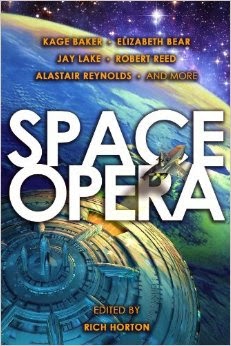
Hará cosa de un año leí el maravilloso "Courtship in the Country of Machine Gods". Me dejó completamente impactado. Desde entonces, Benjanun Sriduangkaew ha publicado muchas más historias excelentes, varias de las cuales van a ser incluidas en antologías como "Lo mejor del año" de Strahan y de Horton y Space Opera de Horton. Está claro que esta autora tailandesa es una de las voces más interesantes que han aparecido en el campo de la literatura fantástica en los últimos años. Así que es un honor y un placer para mí tenerla hoy contestando algunas preguntas sobre su trabajo. ¡Espero que os guste la entrevista! 

Odo: En tus historias usas elementos mitológicos junto con conceptos científicos avanzados y escribes tanto ciencia ficción como fantasía. ¿Piensas que las fronteras entre los géneros se están diluyendo? ¿Enfocas una historia de forma diferente cuando pretendes escribir ciencia ficción en lugar de fantasía? ¿O simplemente no te importan las etiquetas? 

Benjanun Sriduangkaew: Lo enfoco de forma diferente. En fantasía podrías tener eventos que afectan a un continente entero o a un cosmos, pero las posibilidades de la space opera tienen un encanto especial: tantos planetas como quieras, tantas culturas como quieras, ¡un potencial enorme para la variedad! Esto no quiere decir que la CF no pueda tratar historias individuales y personales o incluso mezclar lo personal y lo cosmológico. La obra de Aliette [de Bodard] trata ambas cosas, Ancillary Justice de Ann Leckie es, a la vez, una historia personal y que afecta a un imperio entero; cuando puedo, me encanta mezclar historias personales con sucesos que alteran por completo un universo entero. Cuando escribo fantasía, por el contrario, tiendo a no trabajar con consecuencias que afecten a una galaxia o incluso a un continente, y me inclino más a lo personal y lo tranquilo. Esto se debe a mis idiosincrasias como autora, no a las cualidades intrínsecas de los géneros.

Otra cosa que me interesa es la ubicuidad de la tecnología en la CF y sus implicaciones: estar conectado y online, el acceso a la sanidad y la educación, la velocidad de las comunicaciones. Podría escribir fantasía en la que la gente esté conectada por una red telepática global como un sustituto de estar online, pero eso requeriría sutileza y exposición, mientras que en la CF tener Internet o un equivalente se da por supuesto.

Sí, pienso que las fronteras entre los géneros se diluyen con frecuencia: ¡la existencia de una categoría como la fantaciencia ya es una prueba de ello! A veces introduzco en mi CF tecnología que es un poco de fábula, un poquito imposible. Hay un punto en el que establecer una línea de demarcación puede no ser útil o no estar al servicio del escritor. ¡Pero no estoy en contra de las etiquetas!: cyberpunk, CF bélica o space opera son descriptores útiles, y si pienso que crean las expectativas correctas en el lector es lo que primero usaré, como un resumen. Sólo que no es algo rígido.

Odo: En tu obra exploras temas como el género, la identidad, la herencia cultural... y lo que significan para las sociedades y los individuos. ¿Por qué crees que es importante escribir sobre estos temas? ¿Piensas que la ciencia ficción es especialmente adecuada para explorar estas ideas?

BS: La respuesta sencilla, creo, sería que estos temas son universales. C: Todo el mundo tiene una herencia, una identidad, una relación compleja que manejar entre el yo y la sociedad. 

Mi opinión es que la CF&F en todas sus formas tiene mucho que ofrecer en lo que se refiere a explorar estas ideas por su naturaleza permisiva. Llegué al género de forma oblicua, después de descubrirlo tarde, ya de adulta, en lugar de crecer con él, así que aunque me encantan los aliens y las naves espaciales, también tengo un profundo interés en los factores humanos: cómo la CF&F ofrece un campo de juego para todo tipo de experimentos mentales, especulación antropológica, histórica e incluso física. Te libera de tener que trabajar con las historias existentes si no quieres situar literalmente tu historia en nuestro mundo y también te deja considerar una historia alternativa si lo prefieres.

Odo: ¿Cuál es la situación de la literatura de género en Tailandia? ¿Por qué decidiste empezar a escribir en inglés?

BS: La ciencia ficción ocupa en Tailandia una posición extrañamente respetable, porque se tiene la idea de que si la escribes debes de ser bueno en ciencia. He tratado de explicar que no es el caso, ¡pero no me voy a quejar si deciden que debo de ser muy inteligente por ser capaz de escribir CF! Hay elementos de espiritualidad, terror y realismo mágico que tocan gran parte de nuestra literatura, cruzando las fronteras de los géneros, así que hay un poco de lo fantástico en todas partes.

Comencé a escribir hará unos tres años y la ficción corta parecía la opción obvia en la que probarme; cualquier cosa más larga parecía (y lo sigue pareciendo) increíblemente intimidante. Pero tratar de vender ficción corta a revistas tailandesas involucra procesos arcanos: ¡es realmente difícil encontrar directrices sensatas para enviar los manuscritos! Las revistas en inglés suelen tener directrices más claras sobre lo que quieren y cómo lo quieren. Además, quería practicar mi inglés y es difícil negar las ventajas de llegar a una audiencia más amplia.

Odo: ¿Piensas que los autores procedentes de países no anglófonos tienen más visibilidad en la ciencia ficción y la fantasía ahora que hace unos años? 

BS: Me temo que hace unos años no estaba familiarizada con el género; para cuando llegué, en 2012, escritores como Aliette de Bodard y Lavie Tidhar estaban ya muy establecidos y eran (¡justamente!) reconocidos. Ken Liu ya estaba traduciendo a autores chinos y la editorial Haikasoru de Nick Mamatas ya estaba sonando fuerte. Haruki Murakami y Sergey Lukyanenko estaban teniendo un gran éxito desde bastante tiempo atrás.

Odo: ¿Qué autores te han influido más? ¿Hay algún autor actual al que admires especialmente?

BSJunot Díaz, Jan Morris y A.S. Byatt me han influenciado desde hace mucho; inconscientemente, incluso antes de que pensara en empezar a escribir. En lo más inmediato (¡o en el campo que he elegido, por lo menos!) las influencias han sido más cercanas en el tiempo: Kameron Hurley ha afectado a cómo escribo sobre las mujeres y la brutalidad, Yoon Ha Lee me inspira para esforzarme a mejorar en mi ficción, y Ann Leckie me ha hecho considerar el género en la CF&F a través de un prisma nuevo. Aliette ha sido una guía de innumerables maneras.

Odo: Tu obra me parece muy visual. Por ejemplo, mientras leía "The Bees Her Heart, The Hive Her Belly" no podía evitar recordar el famoso cuadro de Dalí "Sueño causado por el vuelo de una abeja alrededor de una granada un segundo antes de despertar" una de las portadas de Jullie Dillon para Clarkesworld. ¿Pensaste en alguna de estas pinturas al escribir la historia? Y, en general, ¿de dónde sacas la inspiración para tus obras?

BS: ¡Madre mía! Esas pinturas son absolutamente maravillosas (¡tigres!) y la de Dillon es encantadora, la mezcla perfecta de elementos de CF y fábula que intentaba conseguir con esa historia... pero no, no conocía estas obras de arte. La sincronicidad puede ser mágica, aunque creo que a un montón de gente simplemente le gustan las abejas (me viene a la mente 'The Cartographer Wasps and the Anarchist Bees' de E. Lily Yu). En general, la inspiración me viene de sitios extraños, algunas veces de una frase mal escrita que produce un desajuste entre lo figurado y lo literal, a veces de una fotografía con una perspectiva distorsionada. En realidad, ¡casi cualquier cosa se puede convertir en una historia! Me encantaría decir que la inspiración me llega en momentos numinosos mientras paseo por el Puerto de Victoria o algo así, pero por desgracia eso no sucede demasiado. Mis fuentes tienden a ser más mundanas.

Odo: En tu blog dices que "Benjanun Sriduangkaew es una abeja", tu nick en Twitter es @bees_ja, has escrito la mencionada "The Bees Her Heart, The Hive Her Belly"... En serio, ¿qué tienes con las abejas?

BS: ¡Mi apodo es realmente Bee! En tailandés no significa nada, pero en inglés se convierte en un chiste bilingüe, lo que me complace enormemente. Además, las abejas son muy monas (¡cuando no te están persiguiendo!) y me gusta la idea de que representen la fuerza colectiva. ¡Bzzz!

Odo: También estás interesada en la fotografía y en el maquillaje, que consideras una forma de arte. ¿Qué similitudes y diferencias hay entre la literatura y otros modos de expresión artística?

BS: ¡Hurra! Hablar de maquillaje en una entrevista como escritora era una de mis mayores aspiraciones. ¡Es algo que debo celebrar y agradecerte por brindarme la ocasión! El maquillaje es algo en lo que hay ponerse manos a la obra, con la cara como si fuera un lienzo; construir un look (escogiendo el tono de la sombra de ojos, considerando la forma de los ojos o el ángulo de los pómulos) es muy parecido a organizar las palabras en una frase. El gradiente perfecto para el párpado que, además, hace juego con el lápiz de labios me satisface de la misma forma que una frase que sale bien, o que encajar los personajes y la trama. Maquillo a otra gente cuando puedo; cambiar la imagen de alguien (dentro de su zona de confort, por supuesto) puede ser fascinante, tanto desde mi punto de vista como desde el de ellos. ¿Quizás la literatura puede hacer algo similar con la perspectiva del lector? Remaquillando las ideas preconcebidas, por decirlo así.

Más en general, pienso que las artes visuales son más ¿inmediatamente gratificantes? Puede que haya más detalles de los que uno se da cuenta al hacer un examen más detenido, pero puedes decir si una pintura o una fotografía te atrae con un solo vistazo, cosa que es más difícil con un libro o incluso con un relato. Entre la fotografía y la escritura, sin embargo, creo que las palabras ofrecen un medio más flexible... aunque fotógrafos con mejor técnica y equipo que yo seguramente discreparán. C:

Odo: ¿En qué estás trabajando ahora? ¿Puedes darnos un pequeño avance de tus proyectos futuros?

BS: Estoy trabajando en una pieza de space opera más larga, que podría convertirse en una serie de novelas cortas enlazadas o en una novela; es difícil decirlo en este momento, aunque sé que está situada en el mismo escenario de 'Silent Bridge, Pale Cascade' y tiene la misma protagonista principal, la General Lunha. Estoy muy emocionada con ello y espero poder pasar la mayor parte de este año trabajando en eso. Tendrá un montón en común con 'Silent Bridge' pero también incorporará los aspectos extraños y de fábula de 'Bees'. ¡Las formas largas dan mucho más espacio para jugar!

Este año espero publicar siete nueve historias en varias revistas y antologías (Solaris Rising 3 y The Mammoth Book of Steampunk Adventures por nombrar dos) junto con varias reediciones. Y puesto que todo el mundo me ha estado pidiendo que escriba cosas más largas, una novela corta llamada Scale-Bright, fantasía contemporánea situada en Hong Kong. Es mi declaración de amor por la ciudad, entrelazando la mitología con el presente, con una joven cuyas tías son diosas y que se ve arrastrada a una antigua disputa entre dioses chinos, demonios-serpiente y un monje cazador de demonios. Saldrá a mitad de año en una editorial adorable.

Odo: ¿Dónde podemos averiguar más cosas sobre ti y tu obra?

BS: Me podéis encontrar blogueando en beekian.wordpress.com donde alterno artículos sobre maquillaje y sobre escritura. Mi bibliografía está aquí.  

Odo: ¿Quieres añadir alguna otra cosa?  

BS: ¡Probablemente ya he charloteado demasiado! Muchas gracias por invitarme a tu blog. Ha sido un verdadero placer. 

Odo: ¡Muchas gracias a ti por tus amables respuestas y por tu tiempo!

Interview with Benjanun Sriduangkaew

I read the wonderful "Courtship in the Country of Machine Gods" about a year ago. I was completely blown away. Since, Benjanun Sriduangkaew has published many more excellent stories, several of which will be reprinted in forthcoming anthologies such as Strahan's and Horton's "Best of the year" and Horton's Space Opera. It is clear that this Thai author is one of the most interesting new voices to appear in the SFF field in the recent years, and thus it is a honor and pleasure for me to have her today answering some questions about her work. Hope you enjoy the interview! 

Odo: In your stories you use mythological elements together with advanced scientific concepts and you write science fiction as well as fantasy. Do you think that the boundaries between genres are blurring? Do you approach a story differently when you intend to write SF instead of fantasy? Or you just don't care about that kind of labels? 

Benjanun Sriduangkaew: I do approach writing them differently. You could have events which affect an entire continent or cosmos in fantasy but there's something delightful about the possibilities of the space opera - as many planets as you like, as many cultures as you want, a vast potential for variety! This isn't to say SF can't be about individual, personal stories or even a mix of the personal and cosmological - Aliette's [de Bodard] works concern both, Ann Leckie's Ancillary Justice is both a personal story and one which affects an entire galactic empire; when I can I absolutely love to blend universe-altering effects with personal stories. When I write fantasy though, I seem to not work with galaxy- or even continent-spanning consequences as much, tending toward the personal and quiet. This is down to my idiosyncrasies as an author, not intrinsic qualities of the genres.

Another interest for me is the ubiquity of technology in SF and its implications - being connected and online, access to health and education, the speed of communication. I could write fantasy where people are joined to a global telepathic network as a stand-in for being online, but that'd need finessing and exposition whereas in SF having the Internet or equivalent is taken for granted. 

Yes, I think the boundaries between these two genres blur often - the existence of science fantasy as a category alone is evidence! I often introduce technology in my SF that is a little fabulist, a little impossible. There's a point where setting up a line of demarcation may not be useful or serve the writing. However! I don't object to labels - cyberpunk, military SF or space opera are all useful descriptors, and if I feel one sets up the right expectations for the reader that's what I will go for first, as a quick summary. It's not a rigid thing, that's all.

Odo: In your work you explore topics such as gender, identity, cultural heritage... and what they mean for societies and individuals. Why do you think it is important to write about these topics? Do you think that genre fiction is especially suitable for exploring these ideas?     

BS: The simple answer, I think, would be that these topics are universal. C: Everyone has a heritage, an identity, and a complex relationship to navigate between the self and society. 

My view is that SFF in all its forms has a lot to offer when it comes to exploring these ideas owing to its permissible nature. I came to the genre in a sideways approach, having discovered it late in adulthood rather than growing up with it, so while I love the aliens and spaceships I also take a deep interest in the human factors - how SFF opens up a playground for all sorts of thought experiments, speculation in anthropology, history, or even physics. It frees you from having to work with existing histories if you don't want to literally frame our story in our world, and it also lets you consider alternate history if that is more to your liking.

Odo: What is the state of genre literature in Thailand? Why did you decide to begin writing in English?

BS: Science fiction in Thailand occupies this oddly respected position, as there's an assumption that if you write it then you must be good at science. I've tried to explain this isn't the case, but I'm not going to complain when they decide I must be quite smart to be able to write SF! Elements of spirituality, horror, and magic realism touch a lot of our literature across genre boundaries, so there's a bit of the fantastic in everything. 

I started writing about three years ago and short fiction seemed like the obvious thing to try my hand at - anything longer looked (and mostly still looks) incredibly intimidating. But trying to sell short fiction to Thai magazines involves arcane procedures; one is hard pressed to locate a sensible guideline! English-language zines tend to have clear submission guidelines as to what they want, how they want it. Besides I wanted to practice my English and it's hard to deny the advantage of reaching a wider audience. 

Odo: Do you think that the authors from non-English speaking countries are more prominent right now in science fiction and fantasy than they were a few years ago? 

BS: I'm afraid that I wasn't too familiar with genre a few years ago - by the time I got into it in 2012, writers like Aliette de Bodard and Lavie Tidhar were well established and (rightly!) celebrated; Ken Liu was already translating Chinese writers and Nick Mamatas's Haikasoru imprint was already going strong. Haruki Murakami and Sergey Lukyanenko have been stunning successes for a long time.

Odo: What authors have influenced you the most? Is there any current writer that you especially admire?

BSJunot Díaz, Jan Morris and A.S. Byatt have long been influencing me - unconsciously, even before I thought of writing. Closer to home (or my chosen field, anyway!) the influences have been more immediate: Kameron Hurley has affected how I write women and brutality, Yoon Ha Lee inspires me to strive for better in my fiction, and Ann Leckie has made me consider gender in SFF through new lenses. Aliette has been a guiding light in innumerable ways. 

Odo: I find your writing very visual. For instance, when reading "The Bees Her Heart, The Hive Her Belly" I couldn't help thinking about Dali's famous painting "Dream Caused by the Flight of a Bee Around a Pomegranate a Second Before Awakening" and of one of Julie Dillon's covers for Clarkesworld. Was any of these paintings in your mind while writing the story? And, in general, where do you draw inspiration from?

BS: Goodness! Those are absolutely gorgeous (tigers!) and the Dillon is enchanting, a perfect mix of SFnal and fabulism I aimed for with that story... but no, I wasn't aware of these works of art. Synchronicity can be so magical, though I think a lot of people just like bees (E. Lily Yu's 'The Cartographer Wasps and the Anarchist Bees' comes to mind). In general my inspiration comes from odd places, sometimes from a mistyped phrase producing a mismatch between figurative and literal, sometimes from a photograph with warped perspective. Really, just about anything could turn into a story! I'd love to say inspiration comes in a moment of the numinous while I walk down the Victoria Harbor or something similar, but that sadly doesn't happen much - my sources tend to be mundane.

Odo: On your blog you state that "Benjanun Sriduangkaew is a bee", your Twitter handle is @bees_ja, you've written the aforementioned "The Bees Her Heart, The Hive Her Belly"... Seriously, what's with all the bees?

BS: My nickname is really Bee! In Thai that doesn't mean anything, but in English it becomes a bilingual pun, which pleases me no end. Beyond that bees are cute (when they aren't chasing you!) and I like the idea of them representing collective strength. Bzzt! 

Odo: You are also interested in photography and in makeup, which you consider a form of art. What is similar and what is different between literature and other forms of artistic expression?

BS: Hooray! Getting to talk about makeup during an author interview has been one of my highest aspirations - it is a thing to celebrate and thank you for giving me the chance! Makeup is a hands-on thing with the face as a canvas; constructing a look - picking the shades of eyeshadow, considering the shape of eyes or angle of cheekbones - is very like putting together a prose sentence. The perfect gradient eyelid to go with a complementary lipstick satisfy me in the same way as a phrase turned well, or fitting together characters and plot. I do other people's makeup when I can, changing how someone looks (within their comfort zone, of course) can be fascinating, both from my viewpoint and theirs. Perhaps literature can do something similar to the reader's perspective? Pulling a makeover on preconceptions, so to speak. 

More generally visual arts are - I think - more immediately gratifying? There might be more details to notice at closer examination, but you can tell whether a painting or photograph appeals to you at a glance, less so with a book or even a short story. Between photography and writing though, I feel that language offers a more flexible medium... though photographers with better technique and equipment than I would almost definitely disagree. C: 

Odo: What are you working on at the moment? Can you give us a sneak peek of your future projects?

BS: I'm working on a longer space opera piece that may become linked novellas or a proper novel - it's hard to tell at the moment, though I do know that it takes place in the setting of 'Silent Bridge, Pale Cascade' featuring the same main character, General Lunha. I'm excited about it and hope I'll be able to spend most of this year working on that. It'll have a lot in common with 'Silent Bridge' but will also incorporate the weird fabulist aspects of 'Bees'. Longer form gives me so much more room to play! 

This year I'm looking at seven new stories out across zines and anthologies (Solaris Rising 3 and The Mammoth Book of Steampunk Adventures for two) along with some reprints. And since everyone's always been after me to make longer things, a novella called Scale-Bright, a contemporary fantasy set in Hong Kong. It's my love letter to the city, interweaving myth with the now, about a young woman with goddesses for aunts being drawn into an ancient feud between Chinese gods, snake demons, and a demon-hunting monk. This will be out about middle of the year from a rather lovely publisher. 

Odo: Where can we learn more about you and your work?   

BS: I can be found blogging at beekian.wordpress.com where I alternate between makeup blogging and writing blogging! My bibliography's here.  

Odo: Any other thing you would like to add?  

BS: I've probably prattled on at too great a length already! Thank you so much for having me over. It's been a real pleasure. 

Odo: Thank you very much for your kind answers and for your time!

lunes, 17 de febrero de 2014

20 autores de relatos de ciencia ficción que deberías estar leyendo (y IV)

Con la entrada de hoy concluyo la serie dedicada a recomendar 20 autores contemporáneos de relatos de ciencia ficción que recomiendo especialmente (podéis consultar la primera, segunda y tercera parte si os las perdisteis). 

Siguiendo con el orden alfabético, los autores de hoy:


Ian Sales


Sólo por su serie de novelas cortas The Apollo Quartet (de la que ya se han publicado tres de las cuatro entregas) Ian Sales ya merecería aparecer en esta lista. Pero es que, además, tiene otros muchos relatos excelentes, como Wunderwaffe (emparentado lejanamente con Adrift on the Sea of Rains, primera parte de The Apollo Quartet). En su obra destaca el rigor con el que trata los detalles técnicos e históricos, así como el modo en que conjuga la CF más "hard" con elementos de historia alternativa. Para conocer más acerca de este autor, os remito a la entrevista que Leticia Lara y un servidor le hicimos hace unas pocas semanas (también disponible en inglés).  

Benjanun Sriduangkaew


Apunten bien el nombre de esta escritora tailandesa, porque estoy seguro de que va a sonar mucho y con mucha fuerza en los próximos años. Su prosa es poética y tremendamente visual; sus ideas, apabullantes. Combina referencias históricas y mitológicas con la tecnología más avanzada para tratar temas como la identidad personal y sexual o el choque entre culturas. La descubrí con la exuberante "Courtship on the Country of Machine-Gods" y me acabó de conquistar con la maravillosa y extraña "The Bees Her Heart, The Hive Her Belly", pero casi todas sus historias son estupendas (recomiendo también "Annex" y "Silent Bridge, Pale Cascade"). Permaneced atentos, porque muy pronto tendremos aquí mismo una interesante entrevista con la autora.

Charles Stross


Siempre he dicho que Stross me parece un autor irregular. Es capaz de lo mejor y de lo... no "tan mejor". Pero es que cuando lo hace bien, lo hace muy bien. Prueba de ello es su fix-up de relatos Accelerando que contiene auténticas maravillas como "Lobsters" ("Langostas", en la traducción al castellano). Además, su serie de relatos en el universo de The Laundry Files es también excelente, destacando la ganadora de un Hugo "The Concrete Jungle" y "Down on the Farm" (incluida en Brecha nuclear con el título de "En la casa de los locos"). También es muy destacable la historia de viajes en el tiempo Palimpsest, que se alzó con el Premio Hugo en la categoría de novela corta.

Peter Watts


Watts es uno de mis escritores favoritos, sobre todo por su valentía: no le asusta ponérselo difícil al lector, plantearle retos y lanzarle a la cara conceptos filosóficos abstractos. Sólo por ello, para mí está en el panteón de la CF hard junto con Egan. Obras como "Malak", "The Things" y "The Island" (incluidas en la colección de relatos Ad Astra publicada recientemente por Fata Libelli) son buena muestra de ello, aunque quizás mis favoritas sean "The Second Coming of Jasmine Fitzgerald" y "The Eyes of God" (que podéis leer como "Los ojos de Dios" en la imprescindible web Cuentos para Algernon).  


Charles Yu


Tengo la impresión de que Charles Yu no es tan conocido como debiera entre los aficionados a la ciencia ficción. Puede deberse, quizá, a que aunque utiliza frecuentemente elementos del género y referencias a la cultura popular, como los superhéroes ("Third Class Superheroe"), los videojuegos ("Hero Absorbs Major Damage") o los zombies ("First Person Shooter"), su estilo es más bien literario (y, a veces, rozando lo experimental, como en "Please" o en su recomendable novela How To Live Safely on a Science Fictional Universe). Sus intereses, además, no suelen estar alineados con los del lector fandomita clásico, utilizando abiertamente los tropos clásicos como metáforas y con bastante ironía. Por ello, me parece un buen contrapunto a la mayor parte de los autores de esta lista, que podríamos considerar más bien como pertenecientes al núcleo duro de la CF. Recomiendo especialmente su relato "Standard Loneliness Package", que me recuerda ligeramente a la película Eternal Sunshine of the Spotless Mind (Olvídate de mí), por lo que no me sorprende que se hable ya de una adaptación a la gran pantalla.

Conclusión


Evidentemente, se quedan muchos nombres en el tintero. Es imposible que estén todos los que son, porque la salud de la ficción corta es envidiable. Pero sí que creo firmemente que son todos los que están. Espero que estas entradas os hayan servido para descubrir a algún autor nuevo o para revisitar la obra de alguno que ya conocíais. 

La ciencia ficción está muy viva, ¡larga vida a la ficción corta!